How Many People Do You Need to Qualify for a Free Vending Machine?
One of the first questions property managers, business owners, and hospitality operators ask is simple: “How many people do we need before a vending machine makes sense?”
There is no magic number. A location with 25 people can be an excellent vending placement, while a location with 100 people may not be a fit at all.
What matters most is whether enough people pass through the location consistently and have a real need for convenient snacks, drinks, or quick meals.
At Music City Vending, we evaluate each Nashville location individually. The goal is to place the right machine in the right environment, keep it stocked with products people actually want, and make sure it stays useful for everyone who uses it.
Headcount matters, but it is not the whole story
A larger employee count usually means more potential customers, but the number of people on a roster does not always reflect actual vending demand.
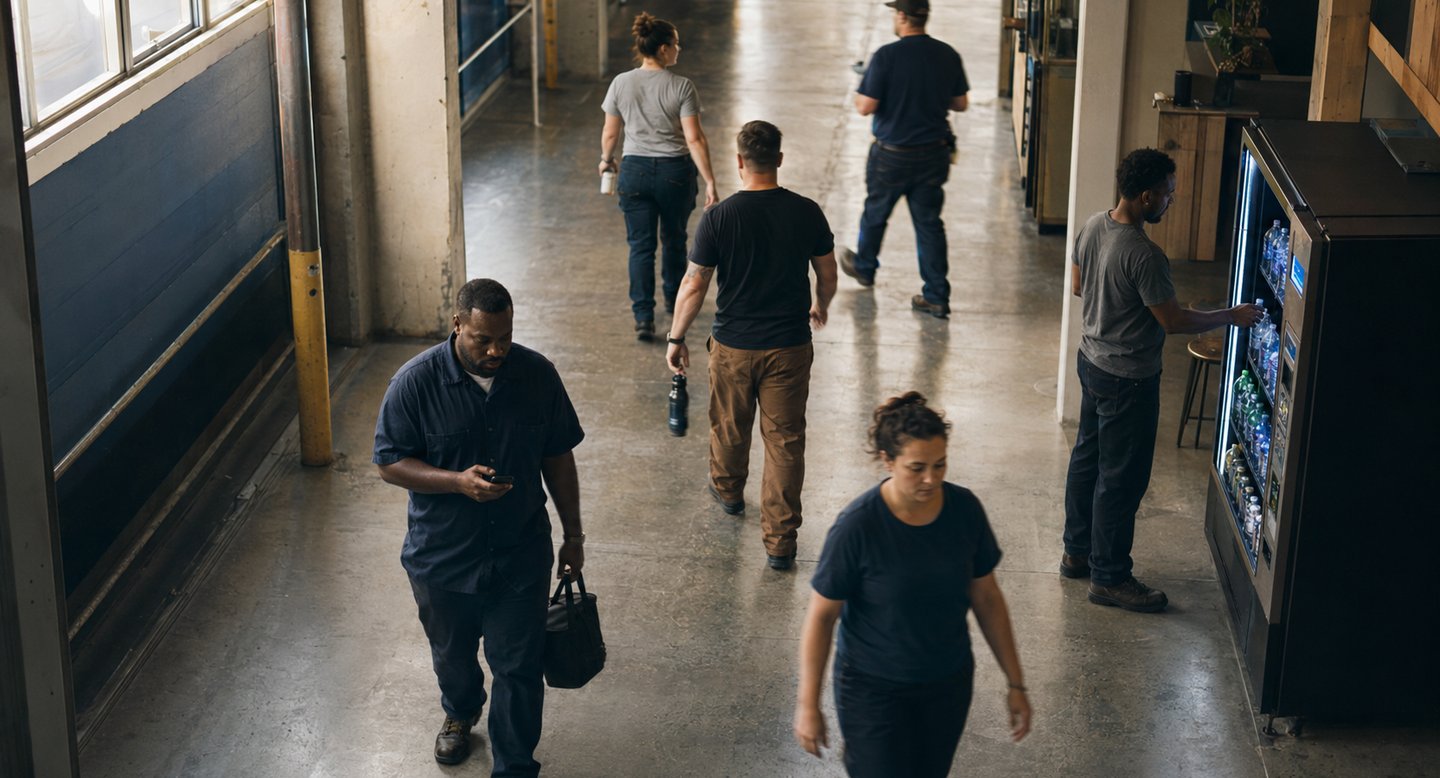
For example, a 40-person warehouse operating two shifts may create more vending sales than a 100-person office where most employees work remotely, take long lunches off-site, or leave by 4:30 p.m.
We look beyond headcount to understand the full picture:
How many people are physically at the location on a typical day?
Are there multiple shifts or overnight workers?
Do people have easy access to food and drinks nearby?
Is the location open to guests, residents, patients, students, or visitors?
Is there a waiting area, lobby, break area, gym, or common space where people spend time?
Would a snack, beverage, combo, or specialty machine solve a real convenience problem?
A smaller location with steady traffic and limited nearby options can be a very strong candidate.
A general rule of thumb for free vending service
Many traditional vending operators prefer locations with roughly 50 to 75 regular daily users. That can include employees, residents, guests, customers, visitors, students, and contractors.
But that is only a starting point, not a hard rule.
Some locations may qualify with fewer people when they have unique advantages, including:
24/7 access or overnight shifts
A remote location with few food options nearby
High visitor traffic
Long wait times
Multiple tenants sharing a common area
A large residential or hospitality component
High demand for cold drinks, energy drinks, protein snacks, or quick meals
On the other hand, a location may need substantially more people if there are several restaurants, convenience stores, or free employer-provided food options immediately nearby.
The best vending locations have consistent traffic
Consistency matters more than occasional volume.
A conference venue might host hundreds of people one weekend and sit nearly empty the next. A small medical office may have a steady flow of staff and patients every weekday. A student-housing community may have residents coming and going at all hours.
That is why we look at a typical week rather than a single busy day.
Strong vending opportunities often include:
Apartment communities and student housing
Hotels and extended-stay properties
Warehouses, distribution centers, and manufacturing facilities
Medical offices, clinics, and rehabilitation centers
Auto dealerships and service centers
Gyms, training facilities, and recreation centers
Office buildings with multiple tenants
Airbnb clusters and shared guest spaces
Waiting rooms and customer-service locations
If people regularly need something fast and convenient, vending can work.
Shift work changes the equation
Locations with second-shift, overnight, or early-morning workers can be especially valuable for vending.
When the cafeteria is closed, nearby restaurants are shut down, and employees cannot easily leave the property, a well-stocked vending machine becomes more than a convenience. It becomes one of the only options available.
That is particularly true for warehouses, manufacturing facilities, hotels, healthcare settings, transportation-related businesses, and certain residential properties.
A location with 30 people working overnight can sometimes be a better fit than an office with 75 daytime employees surrounded by coffee shops and restaurants.
The machine type should match the location
Not every location needs the same machine.
A simple beverage machine may be perfect for a gym or auto service center. A snack-and-drink combo machine can work well in a smaller office, hotel lobby, or apartment clubhouse. A larger facility may benefit from multiple machines or a more customized setup.
The products matter, too. A modern vending machine can offer more than chips and soda. Depending on the location, popular options may include:
Water, sparkling water, soda, tea, and energy drinks
Protein bars, jerky, nuts, and better-for-you snacks
Candy, chips, pastries, and familiar favorites
Microwaveable meals and cold food options
Personal-care or specialty products
You can learn more about the available options on our vending machine types page.
What if you do not have enough people?
Do not assume the answer is no just because your location is small.
A smaller location may still be a fit if it has strong traffic patterns, limited food access, or a specific audience with clear demand. In some cases, a smaller machine, a specialized product mix, or a shared vending setup makes more sense than a traditional large installation.
The best next step is simply to talk through the location. We can look at your typical traffic, operating hours, nearby amenities, and the kind of machine that would serve your people best.
If you are considering a free vending machine for a Nashville property, contact Music City Vending and tell us a little about your location.